Showing posts with label Campaign Setting. Show all posts

Thursday, August 16, 2012

Olympus Mining Industries (OMI)

Industry: Mining, energy
Headquarters: Olympus City, Mars, Sol System
Key people: Sophia N. Tusi, President
Revenue: increase UCN $ 2.147 trillion (2222)
Employees: 24,008,000 (2222)
Olympus Mining Industries (OMI) is a Mars-based interplanetary mining corporation, which is amongst the largest corporate states in the UCN. Olympus Mining Industries, including its consolidated companies and its share in equity companies, is one of Sol Systems largest fuel and ore producers, eludium marketers, hydrocarbon marketers and antimatter manufacturers.
The OMI is based primarily in Olympus City, located on the slopes of the mighty Olympus Mons of Mars. This city is owned and controlled entirely by the OMI, and is considered the jewel of the Sol System for its beauty, industry, and use of engineering wonders.  It is from this capitol, that the OMI controls and directs its enormous fleet towards the betterment of mankind.

History
Olympus Mining Industries is the longest running corporate venture on Mars, having its start from the earliest days of the Mars Terraforming Initiative in 2020.  In those days the OMI was a coalition of elements from the old Shell Oil, Space-X, NASA, and several smaller companies. From its beginning, OMI has been focused on unlocking energy sources to power a busy human race.
Now OMI ships and power stations can be found throughout the Sol System, from positron forges near the Sun (where antimatter is created), to gas mining on Jupiter, Saturn, and mining interests in the belt and on the moons of Jupiter and Saturn.
Within the past fifty years, Olympus vessels have begun venturing into the reaches, seeking out energy and opportunities. The "Nomad" series of vessels are a recent marvel. Massive starships sent far from the Sol System to set up hubs from which the company might assay the surrounding star systems and make claims. These vessel are veritable flying cities, equipped with a Shors Hammer class Quantum Computer to aid the crew and to set up a "quantum beacon" to allow instant communications with home.

Government and Politics
Like all corporate states of the UCN, Olympus Mining Industries is run by an all-powerful Board of Directors under the leadership of President and CEO Sophia N. Tusi. Under the leadership of President Tusi, Olympus Mining Industries has expanded beyond the Sol System into the reaches, seeking an ever-increasing variety of resources and sources of power.
As a primarily mining and energy producing corporation, OMI has a large number of "factory" style work environments and has a "working man" attitude of self reliance and tough determination drilled into its employees. As with all major corporations, there is a definite line between management and worker "castes" enforced by policies and the OMI security forces. Execs rarely interact with workers and vice-versa.

Economy
Olympus Mining Industries is always looking for materials to mine and process, with a particular focus on gold, cobalt, iron, manganese, molybdenum, nickel, osmium, palladium, platinum, rhenium, rhodium, hydrocarbons, ruthenium, tungsten, oxygen, hydrogen, water.
Olympus Mining Industries specializes in the following special materials;
Antimatter: The production of antimatter is extremely dangerous, and expensive, but the end result is the super fuel that allows interstellar travel possible. At present, the OMI is responsible for 64% of the antimatter consumed by the UCN fleets. Antimatter pollution is a major issue, as engines using this material for power produce a significant amount of radioactive waste.  
Eludium: A rare ore mined from certain neutron stars, Eludium is crucial in the production of gravity manipulating technologies as well as the newer models of matter screens. Eludium is very expensive to process, and mortality rates amongst mining crews is quite high. Despite these issues, Olympus Mining Industries controls the majority of Eludium production in the UCN.
Hydrocarbons: Reliance on hydrocarbon fuels (ie oil, amongst other things) is still widespread in the world of 2222. Hydrocarbons are cheap, easy fuels that are also useful in construction, domestic use and even as a component in many food products. OMI holds many mines throughout the Sol System and beyond, and are masters of its processing.

Io
Io is one of the moons of Jupiter. It was discovered in 1610 by renowned astronomer and scientist Galileo Galilei.A rocky world, by the 2100s Io had been colonized by Olympus Mining Industries who have built domed cities in order to create a suitable atmosphere for living.
The domed and underground cities are home to a wealthy aristocracy of corporate executives and their families. The domes are full of the very latest diversions and luxuries, and the best boarding schools in the Outer So System. Maintaining this colony are a great many robotic laborers, servants, as well as a solid core of human and chuman menials and technicians.OMI Security Guards have their own sectors and are quite well paid.
As an "ideal" world for the privileged, Io is closed to idle visit. Those just looking to see the sights had better have their papers in order. Security here is tight, but the guards are usually quite bored, and so greatly enjoy getting to harrass anyone there without proper clearance.
Many OMI execs will come from Io, or have at least some family there. It is considered a real honor to from or attached to the Io aristos, if only for name dropping purposes. For those not born, raised and educated in ivory tower opulence, execs from Io might seem painfully distant from "lesser" men and women, privileged, but a bit out of touch.

   
Using Olympus Mining Industries in the X-Plorers RPG
Olympus Mining Industries is a good example of a Corporate State for the X-Plorers RPG. Its is an immense, monolithic corporation that can pretty much do what it wants.Employees of the corporation are almost always loyal, as the OMI spends a great deal of efforts to make sure its employees are busy, either with work or entertainment.
Outside of the corporation Olympus is widely loathed as a slippery corporation with a long grocery list of violations filed with the UCN. Antimatter pollution, genocide, claims jumping and all manner of villainy have been laid on the doorstep of this Corporate giant. But with the kind of money that OMI can spend, it can afford mighty big bribes, and the best lawyers money can buy.


Friday, August 3, 2012

Chuman: Homegrown Allies

Chuman pilots getting ready for a mission.
The Chuman (also known as the Humanzee or Manpanzee) is a chimpanzee/human hybrid initially created via genetic engineering. These creatures have been companions for humankind since the late 21st century, and can now breed naturally. Chuman can now be found working as pilots, technicians and many of the dirty and dangerous jobs so abundant in a busy universe. They have a significant presence in the UCNP, especially in outlying colonies where personnel is always thin. Though they are considered fully sentient by the UCN under the Transgenics Sapience Act of 2120, Chuman are still treated as second class citizens, relegated to heavy labor and lower management positions at-best.
An adult chuman is only slightly shorter than the average human, though broader in the chest, with longer arms and shorter legs. Though taller and straighter than a chimpanzee, they retain an ape-like posture and gait when walking. All Chuman have ape-like features and are covered in hair. They can wear clothing and use equipment designed for humans.
AC: 15, MV: 6, HD: 2D6, THB: 20 Att: 2, Dmg: 1d10/1d10, XP Value: 65

Player Character Information
Chuman make excellent player characters. They are tough, versatile, and allow a player to run a non-human without being too alien. Chimps and humans have more in common than humans and aliens would. Chuman characters will have been raised within human culture, albeit in a lower tier of society (usually), and will likely have a great deal in common with human PC's. However it should be noted that Chuman are considered OK to treat as sub-human in society, so elements of racism can and should be an element in the game world.
Restrictions: Chuman are restricted to the Scout and Technician classes, as these fields are what their species was initially engineered for. Though many Chuman are capable of becoming Scientists and Soldiers, the educational opportunities do not exist for these fields.
Attribute Adjustments: +2 PHY, INT -2
Bonuses: Chuman have a base armor class of 12, and a +2 attack bonus when in melee due to their long arms. Also, the great fists of a Chuman deal a whopping 1d10 damage, making it capable of breaking bones and denting armor.

Thursday, August 2, 2012

Still Here!

It has been awhile since my last posting. But FEAR NOT, the (mad) scientists over here at Space Madness Incorporated have been working hard on further installments and additions to the SPACE MADNESS blog, particularly fleshing out the Terry Go Home campaign setting for the X-Plorers RPG.

I will be further detailing my take on my Terry Go Home campaing setting for X-Plorers, particularly regarding alien species, vehicles, and assorted setting details to help flesh out a vibrant game setting. I will have additional material posted soon so STAY TUNED!

On a related note, the X-Plorers RPG will be shipping to games stores this Fall. This is a big deal for an independant game company, especially one with origins as humble as X-Plorers. When Dave Benzi made the game, he really just wanted a fun game that he could play with his kids, one that focused on pulp sci-fi adventure. I think thats an origin we can all appreciate.

So get out there and support this game, and the games stores that sell it. Ask the folks at your local games store about it, spread the word. If you want awesome things to happen, you have to help.

For those of you who dont know, X-plorers is a science fiction role-playing game with an old-school feel. The system is basic and allows for endless possibilities! Here's a few resources to get you started:

Get a copy of X-Plorers now
X-plorers publisher, Brave Halfling
Official X-plorers blog
X-plorers Forum on Bravehalfling.com

Wednesday, May 23, 2012

NUGGET System RPG

This is a re-post from my other blog. I post it here because I intend to use the below system to flesh out a Space Opera setting that I have been knocking around for a bit (more on that soon). The below system is a "rules light" one that focuses on story rather than an endless list of rules.
Personally, I LOVE dice pool systems. This likely comes from my early introduction into games via White Wolfs "Classic" Storyteller System. Such systems allow a wide range of character concepts, but are not so simple as to avoid the mis-rolls, disasters and victories that are so very much a part of tabletop role-playing games.
So below are the base rules for the NUGGET system.This simple and easy to learn game system is brought to you by the folks over at Silver Branch Games and is completely free. You can download this game system here, but for ease of reference I have posted the rules system below.

NUGGET SYSTEM
NUGGET is a simple set of roleplaying game (RPG) rules. A group of people sit around pretending to be imaginary characters having adventures in a fictional setting. Each controls a player character (PC), except one who takes the role of Game Master (GM), setting up situations for the PCs and controlling the other characters they meet (non-player characters, NPCs). The players say what their characters do and the GM tells them what happens next. The story progresses through scenes of particular actions at a location. You.ll need pencils and paper and about 10 six-sided dice.

Basics
Characters are described with Advantages and Disadvantages compared to an average, untrained person. If a task is neither trivial nor impossible, you roll a "pool" of a variable number of dice to see whether you succeed. The pool is made up of the Base Dice that an average person would get, plus one die per Advantage (Adv) from a Skill (knowledge and training) and an Attribute (natural talent), minus one die per relevant Disadvantage (Dis); e.g. Research + Brains.
Base Dice (BD) set difficulty. Just rolling your Advantages is BD 0, a task that needs a professional. If anyone can have a decent try it.s BD +2 (probably the commonest). If only the best can pull it off it.s BD -2 (subtract 2 from your Advantages). Near-impossible tasks are BD -4. The GM can give an extra Adv or Dis for special situations. If you end up with no dice it.s just too hard.
Count each die that shows 4, 5 or 6 as one success. A single success means you just barely do it, though not very well; 3 successes is a good, solid result; 5 or more successes is truly impressive. No successes (all rolls 1, 2, 3) means failure. If they.re all 1.s that.s a fumble: you messed up and the GM describes the awkward consequences.
Exceptional success can be handled in one of two ways. For a realistic or gritty style run the game lid-on.: if all dice come up as 6.s you get one extra success. For high-energy, unpredictable action run it .lid-off.: each die that shows 6 can be rolled again for a possible extra success, and further 6.s give further re-rolls.
Opposed rolls happen when two characters come into conflict - a physical fight, interrogation, haggling, armwrestling or a chess match. Both characters make appropriate rolls. The one with more successes gets their way, and the difference tells you how decisive it was. Ties usually go forward (dramatically!) to another roll.

Making a Character

Attributes
These describe natural talent at general kinds of things. As NUGGET is very simple there are just four:
Brawn - strength, toughness, stamina
Agility - speed, coordination, flexibility
Brains - noticing, remembering, working things out
Will - determination, self-control, charisma
Most people are rated at 0, the average point. Some are talented at +1. A few are exceptional, rated +2. Some are particularly poor, rated -1. Player characters are well above average. You have 2 points to raise Attribute levels. Spend both on one at +2, or split them between two at +1. If you take one at -1 it gives an extra point to spend.

Skills
These are areas of knowledge, training and experience, like Fighting with Swords, Piloting Starships, Chemistry or Investigation. They go in levels 1-4: Basic, Professional, Expert, Master. NUGGET doesn.t give a list, so you.ll have to name your own, neither too broad nor too narrow.
Write down your Occupation. This is what your character spends their time doing - Space Smuggler, Doctor, Private Detective, Barbarian Warrior, Schoolgirl, etc. It gives 1 level with a cluster of Skills, and you don't have to list them all: whenever it makes sense for an action to fit within the Occupation you get an Advantage on the roll (but use a specific Skill if you have one written down).
Pick one Core Skill that.s central to your Occupation (e.g. Medicine for the doctor, Sword Fighting for the barbarian, Pilot Starship for the smuggler) and write it down separately as level 2 (professional).
You also have 4 levels of Skills to allocate as you wish.
They can be new hobby Skills (the doctor might be an amateur stage magician), or you can increase specific Skills from your Occupation - your work is your life!

Finishing off
Write down 1-3 Goals - things that are important to the character, which could be people, objects, organisations, principles or things they want to achieve.
Write down your Initiative bonus: the total of Agility and Brains Advantages and the levels of your highest Fighting Skill. (Disadvantages subtract; it can go negative.)
Write down your Physical Resistance (2 + Brawn Advantages) and Mental Resistance (2 + Will Advantages). These scores are the number of dice you'll actually roll (BD 2) - it speeds things up if they.re handy.
Write down Destiny Points, with space for it to change over time. You start with 1 point.
You have ordinary items of equipment to allow you to perform your Skills - beyond that it depends on the game.

Combat
Initiative. When it comes to high-speed action, things happen in rounds: chunks of time a few seconds long divided into 10 phases. At the start of a round everyone rolls one die and adds the result to their Initiative bonus.
The GM counts down from 10 to 1, and your initiative total tells you when you can take your action (e.g.punching, throwing, shooting). After phase 1 the next round starts, until the fight is over. A total over 10 means you can act once on 10 and again on the remainder (e.g. 14 => 10, 4), up to 10, 8. A total less than 1 means you.re too confused to take an action this round. You can also do one simple thing for free each round any time after you're ready for your first action (Phase 1 if you can.t act) - e.g. drawing a weapon, picking something up or running a short distance. More involved actions like all-out sprinting take an action. You can delay an action till later in the round. Characters acting on the same phase go in order of Initiative bonus. You can defend against an attack at any time; one roll counts against all attacks in that phase.
Attack and defense. Attack rolls use the relevant Skill plus Agility, usually BD +2. Defences, like parrying or dodging, are similar but use any close combat Skill (e.g. not Gun), and against projectile weapons are BD 0 to BD +2 depending on cover. If the attacker gets more successes it.s a hit and does damage; otherwise it misses.
Damage. Add the difference between attack and defense successes to the base damage, below. Hand-tohand attacks add Brawn Advantages as well.
0 unarmed
1 knife, small club
2 sword, big club, axe, spear, arrow
3 big sword, polearm, handgun, SMG
4 rifle, shotgun
6 machine-gun
8 tank gun

The target rolls Physical Resistance to withstand the attack, with successes taken away from the total damage. (A fumble adds 1 to damage!) Read the result off here:
1-2 Hurt
3-4 Injured
5-6 Injured and Unconscious
7+ Injured and Dead

Note Hurts and Injuries on your character sheet : they build up and give penalties while they last. Hurts are bruises and cuts that slow you down - each subtracts 1 from Initiative for future rounds and takes 5 minutes of rest to disappear. Injuries are serious wounds - each takes 1 off Initiative and gives a Disadvantage for all rolls except Resistance, and takes a day of rest and care to recover.
.Unconscious. and .Dead. are self-explanatory. Someone with medical supplies can try first aid: roll Medicine + Brains, BD 2. Each round the patient and healer do nothing else, one success can be spent to heal a Hurt.
Combat details. Any armor worn subtracts from damage: 1-3 points for archaic types, possibly up to 5 for modern types. Firearms with spray/burst firing give an Adv to hit. Shields give an Adv to defend. Surprise, e.g. if an opponent has successfully sneaked up, means no defence roll is possible. Unseen opponents turn attack and defense into Fighting + Brains rolls, BD 0.

Special rules

Weird stuff
This includes things like magic and psychic powers. NUGGET doesn't try to cover these. The way they work makes a big difference to the feel of a game, and that needs detail. One simple way is to set them up as Skills, rolled normally but costing a physical or mental Hurt for fatigue unless a success is spent to be good enough to avoid it. The players and GM need to agree how much or little these can do. Possibilities include .Telepathy., .Moving Objects., .Fire Magic. and .Illusion.. Mind-based attacks use Brains with Will as base damage, or just a roll with Will.

Destiny Points
These are a mixture of karma, luck and self-esteem, given by the GM during play and spent to direct the character.s path. Use counters for Destiny during a session and write it down at the end. Gain a point for doing something cool like beating an enemy, performing a dangerous stunt, or just making everybody laugh. Gain a point if the character takes an important step toward one of their Goals in a scene - but a point can also be taken away if a Goal is seriously thwarted, like your beloved aunt getting hurt or the Empire taking over your base! (If you are already at zero and would lose a point, the GM gains one to a general pool for the opposition.) Spending Destiny. Spend one to make a roll again and keep the result you prefer. If the GM allows it, spend one to be unconscious instead of dead (some games should be dangerous, but usually heroes can survive all sorts of harm). Buy a new level of a Skill between adventures for (new level x 5) Destiny Points. Specific games may have further uses, like establishing a minor, plausible coincidence, or getting one die to roll when you have none.

Opponents
In general, give opponents the abilities they ought to have rather than trying to balance points. Minions are lowlevel riff-raff with an Occupation and low or no Attribute and Skill bonuses. Put them all on initiative (3 + bonus).
Even one Hurt takes them out of a conflict. Henchmen have higher stats and are taken out by an Injury or 3
Hurts. Major villains work like PCs, with abilities as good or better, plus other advantages like henchmen or fiendish devices. They start with Destiny - often one point per PC - and can get more for advancing their plans.
Animals, monsters, aliens etc can have Attributes beyond the normal range: up to +4 and down to -2. This is most common with Brawn, related to size.

Threats
Apart from combat, characters get exposed to all sorts of things that can do them physical or mental harm, like fire, poison, falling, or terrifying monsters. They're all handled the same way: the GM gives a damage rating from the table below, which is opposed by the appropriate Resistance and applied as above.
1 Irritating
3 Painful/Tiring (desert)
5 Damaging (ordinary fire, drowning)
8 Deadly (strong electricity)
10 Extreme (space, deep ocean)
Record mental damage separately: Hurts and Injuries add to those from physical damage, but heal
independently. An .Unconscious. result from a Threat gives an impairment lasting about a scene, e.g. blinded by a flash, fleeing in mindless terror. .Dead. gives a permanent condition - curing it could be a story seed.

Thursday, May 3, 2012

World Seeding: Panspermia Asteroids and Exegenisis


Where did life come from? Its an old question whose answer(s) have been hotly debated down through history. Whether you prefer religious, scientific, or a mixing of the two for your answers, the truth of the matter is that we can never really know. The best we can hope for is a really good guess, mixed in with an awful lot of hope that we are not missing the point entirely.

Still, the question is a very interesting subject to ponder. Especially when we use science fiction to flesh out the weird and wonderful nature of life, death and the vast expanses of space-time.

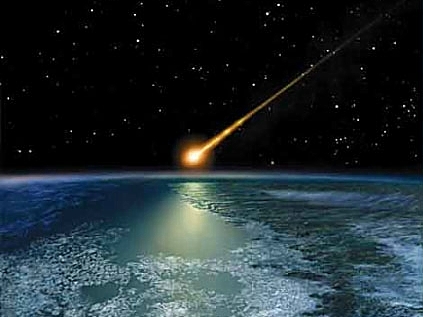
One interesting theory is that life on Earth came from space. NASA researchers studying meteorites found that they contain several of the components needed to make DNA on Earth. The discovery provides support for the idea that the building blocks for DNA were likely created in space, and carried to Earth on objects, like meteorites, that crashed into the planet’s surface. According to the theory, the ready-made DNA parts could have then assembled under Earth’s early conditions to create the first DNA.

Check out this cool video for some of the details of this fascinating subject:


Of course such theories are just that; theories. However they ARE very interesting and and feed the imagination machine at the heart of all sci-fi writers, artists, dreamers and geeks. The idea that life can be helped along my space bullion cubes dropped into the chemical stew of a planet makes the possibilities of extraterrestrial (and extra-solar) life all the more possible.

Another variation on this theory is "Directed Panspermia" which is the seeding of worlds is directed by intelligent beings. In-essence this is a form of intelligent design, albeit a scientistic variant of the concept. The late Nobel prize winner Professor Francis Crick, OM FRS, along with British chemist Leslie Orgel proposed the theory of directed panspermia in 1973. A co-discoverer of the double helical structure of the DNA molecule, Crick found it impossible that the complexity of DNA could have evolved naturally.

Crick posed that small grains containing DNA, or the building blocks of life, could be loaded on a brace of rockets and fired randomly in all directions. Crick and Orgel estimated that a payload of one metric ton could contain 1017 micro-organisms organized in ten or a hundred separate samples. This would be the best, most cost effective strategy for seeding life on a compatible planet at some time in the future.


This theory is of-course fertile ground for science fiction of all kinds, as the concept of super-intelligent aliens are involved in seeding planets. The potential horror of this is rarely touched upon by hopeful scientists and mystical gurus of course.


The Science Fiction Treatment
 In my favorite science fiction books, comics, movies and RPGs (including the X-Plorers RPG), life is widely spread across the galaxy. Though you still get really weird alien life, many worlds not only support life, but this life falls into categories that are comparable to life here on Earth. Plants are plants (and often falling into familiar forms such as trees, grass and flowers), and animals not that different from Earth reptiles, mammals, insects etc are all in evidence.
Though members of X-Plorers teams would be happy to find habitable worlds where potential food is available and air is breathable, one must sometime wonder why so many worlds in the reaches are inhabitable. If they were terraformed, than by whom? And will they mind finding all of these pesky humans messing up their planets?


Tuesday, May 1, 2012

Mystery Men RPG


Superhero role-playing games and I have a love/hate relationship. While I love comic books, and grew up on tales of superheroes, mutants and monsters, their translation into a working RPG is tricky to say the least. This trouble mostly has to do with the large lists of powers, many times attempting to cover the entire gamut of super-powers seen in the pages of comic books. Unfortunately, a truly comprehensive and "realistic" system quicky creates both a book-keeping nightmare, and a very, very dry game.

So imagine my delight when I encountered Mystery Men. This delightful game is a rules-lite superhero role-playing game based on the original fantasy role-playing game rules. Mystery Men! is designed to let you create characters quickly and get right into the crime fighting. The system is light, but the possibilities are nigh endless, limited only by the imagination of the player and gamemaster.

The game has only three classes, The Adventurer, The Scientist and The Sorcerer. The Adventurer is the classic two-fisted purveyor of justice (or villainy) who is well represented in comic books. The Scientist is the creator of marvellously weird super-science of comic and movie lore, While the Sorcerer is the weilder of weird forces that whips up plot-promoting and destroying effects. All three classes use the same "pool" of powers, which are effectively "spells" from D&D and other classic games, but can be taken as go-to powers, or in the case of the sorcerer and scientist, material for spells and weird gadgets.

The game was created by John M. Stater who is himself a huge fan of all that is pulp and marvelous. His obvious adoration of Golden and Silver Age comics is apparent in every page of this game, as well as in his blogs; The Land of Nod and Strange New World.
So check out this game: You can download it for free here, or buy a print copy here (only $8!).I strongly recommend spending the $8, as we should all want to encourage this level of awesomeness.

 
Uses in Science Fiction Adventures
Personally, I think Mystery Men would be GREAT for a pulpy, space-going game. Science-Fiction, Cartoons and Comics have always been chock-full of space-faring superbeings. Though most of such instances are of marauding aliens attacking Earth, many involve space-faring heroes and entire adventures taking place on assorted other planets and in the depths of space itself.
Not all superbeings can live in the vacuum of space or fly (few of them in-fact), but rely on all of the spaceships, survival gear and other gadgets that help make science fiction tales so much fun.
Some that come immediately to mind are:
Lensmen Series: This classic series of science-fiction novels is effectively about super-beings protecting the galaxy. Cool stuff!
Shi'ar Imperial Guard: A group of superbeings gleaned from across the galaxy to serve and protect the Shi'ar Empire. This is amongst the most impressive (yet mortal) supers teams of the Marvel Universe, and yet they only rarely gained any face-time. Frequent foes are the dreaded Kree, Skrull, Galactus (and assorted heralds) and other nasties.
Legion of Super-Heroes: One of the best of the DC comic series in my opinion. A future version of the classic justice league, now protecting sentient beings across the galaxy.Many of the space-faring enemies found in Superman and other series are very much still around in one form or another.
Space Ghost: Loved this cartoon as a kid. And though it is pretty goofy, it definately has a high wowie-zowie factor that cannot be denied.
Deathstalker: A space opera by Simon R. Green (http://en.wikipedia.org/wiki/Simon_R._Green) that features at its core a relatively small number of superbeings who savagely fight over the universe.
Star Wars: The Jedis for all intents and purposes are superheroes, and the Sith are super-villains. They not only posses impressive powers, but the universe is regularly devestated by their struggles and influence.

I will be posting articles for using Mystery Men in a space-faring setting, as well as taking a look at superheroes and villains found in science fiction. So stay tuned!

Friday, March 9, 2012

Terry Go Home!: X-Plorers Campaign Setting

The campaign setting described in X-Plorers is wide open, with only scant material given so-as to allow Storytellers free reign to make their setting their own. This allows a "sandbox" type of game, where players can explore to their hearts content with no fear of tripping over canon material.

However, additional setting tidbits can always help in making a game exciting. So, I will be posting a series of articles featuring my own interpretation of the setting. I am calling it:

Terry Go Home!
As mankind seeks out new worlds to stake his or her claim in the Universe, there is always someone or something that just seems hell-bent on making things difficult. Whether it is hostile natives, hostile neighbors, the rigors of space and alien worlds or bureaucrats, things are rarely simple.
In this version of the X-Plorers setting, I will be looking at the universe from the perspective of the common man, the miners, laborers, policemen, and colonists trying to find their way in the universe. It will be fairly tongue-in-cheek (though often cynical), poking at the absurdities and frustrations everyday folk must endure while being assaulted while just trying to make a living. Hostile natives, hostile businessmen, and a universe full of trouble await.

Stay tuned!